
Summary
When a loved one shows signs of memory loss, deciding between memory care vs. staying home safety requires weighing real risks—from wandering and medication mistakes to falls and delayed emergency response. This guide helps Pittsford families understand how specialized communities address these concerns while honoring dignity and choice.
- Wandering, kitchen accidents, falls, medication mix-ups, and neglected self-care signal home may no longer be safe enough.
- Memory care communities use secured entries, open sight lines, specialized flooring, handrails, and color contrast to prevent accidents and disorientation.
- 24-hour staffing means immediate response to falls, health changes, and emergencies that might go unnoticed for hours at home.
- Trained team members recognize subtle signs of distress, use de-escalation techniques, and redirect safely—skills most families lack formal training in.
- Secure settings allow residents meaningful choice and dignity while protection happens quietly in the background, unlike constant home supervision.
When a loved one starts showing signs of memory loss, the first question is often a quiet one: is home still safe for dementia? Families in Pittsford, NY, often find that the memory care vs. staying home safety decision comes down to everyday details, like a stove left on or a door opened at 2 a.m.
Home is familiar, and that matters. But dementia brings risks that love and good intentions can’t always cover, from wandering to missed medications to slow emergency response. Looking honestly at both options is the best way to choose well.
When Home Becomes Unsafe for Dementia
A few warning signs suggest the house may no longer offer enough protection:
- Wandering, including leaving the house at any hour without recognizing danger
- Kitchen accidents, such as forgetting to turn off the stove or leaving appliances running
- More frequent falls as balance, spatial awareness, and familiar routes become harder to manage
- Medication mix-ups, including missed doses, double doses, or confusion over complex schedules
- Changes in hygiene and nutrition, like skipped meals or neglected self-care routines
Home modifications such as grab bars and cleared walkways help at first. Eventually, though, cognitive changes outpace what physical fixes can do. At that point, even attentive family oversight may not be enough to support a loved one’s health and wellbeing. These changes are a natural part of how dementia progresses, and they don’t mean anyone has done something wrong.
Memory Care Safety Benefits Built Into the Environment
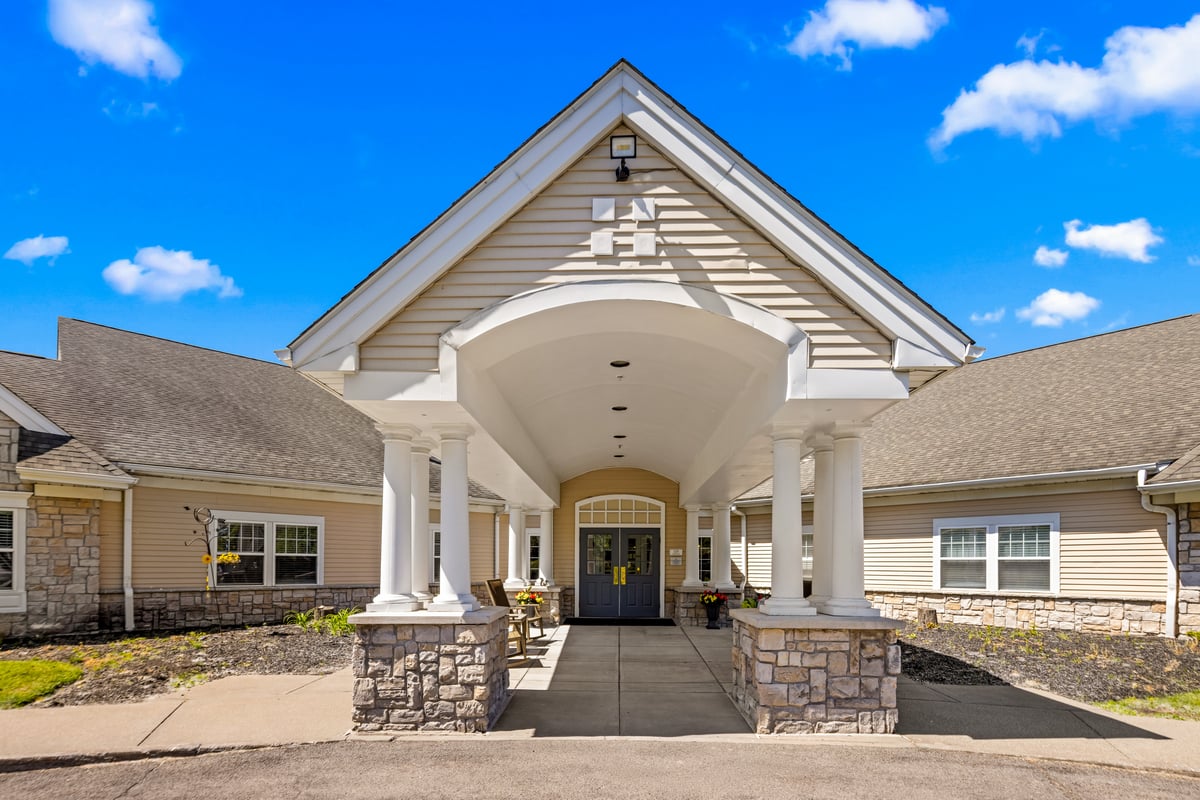
Memory care communities are designed around the safety issues dementia creates. Secured entries and exits address wandering, and discreet alert systems let team members know if a resident heads out unattended. Open sight lines allow the care team to keep watch without feeling intrusive. Rittenhouse Village Pittsford is a dedicated SHINE® Memory Care community, with familiar routines, secure surroundings, and daily engagement in a warm, boutique-style setting.
Memory care communities often add design details that support safer movement and less confusion:
- Even lighting that cuts down on shadows and disorientation
- Flooring without busy patterns that can look like obstacles
- Walk-in showers with grab bars and temperature-controlled water to prevent scalding
- Hallways with handrails and rest areas
- Color contrast between floors, walls, and furniture to aid navigation and lower fall risk
- Memory boxes or familiar items outside bedroom doors so residents can find their own apartments
Common spaces also avoid sharp corners and hard surfaces. Together, these memory care safety benefits let residents move freely while lowering everyday risks.
24-Hour Supervision and Emergency Response
Round-the-clock staffing means someone is always there to respond, including to situations that could go unnoticed for hours at home. Trained team members watch for small changes in behavior or health that family members can miss, especially overnight, when wandering and confusion often increase. If something happens, emergency systems connect residents to staff who assess the situation quickly, contact emergency services when needed, and update family.
That level of oversight speaks to one of the biggest dementia safety concerns at home: gaps in supervision. Even with regular visits or hired help, there are stretches when no one is there. A fall or a medication mistake during those hours may not be discovered right away, which can delay treatment.
Specialized Training for Care Teams
Team members in a memory care community receive training that goes well beyond basic daily support. At Rittenhouse Village Pittsford, that training is built around SHINE® Memory Care, a program recognized by the Alzheimer’s Association®. Team members learn to spot distress and pain or illness a resident can’t describe, understand what triggers changes in behavior, and use calming de-escalation techniques. They also learn to redirect someone who wants to leave without making them feel dismissed, and to help with daily routines in ways that protect dignity and prevent accidents.
That skill matters most in hard moments. Family members, however loving and dedicated, rarely have formal training in the behaviors and safety needs that come with cognitive decline. Professional team members bring both training and daily experience with residents living with dementia.
Balancing Choice and Protection in Different Settings
A good memory care community protects residents while leaving room for choice. Residents decide how to spend their day, what to eat, and who to spend time with, all within a secure setting built for their wellbeing.
At home, that balance is harder to strike. Enough supervision to keep someone safe can mean taking car keys, locking cabinets, or watching a loved one’s every move, which strains family relationships. A memory care setting relies on thoughtful design and trained support instead. Residents can explore common areas, join activities, and make everyday choices while team members offer quiet help in the background. For many families, this protects dignity better than constant supervision at home.
Making the Right Safety Decision for Your Family
Weighing memory care vs. home risks starts with an honest look at where things stand today. Consider the specific risks your loved one faces, like wandering, falls, and medication complexity, along with how quickly memory loss is progressing and what needs may come next. Think about your own capacity to provide safe oversight while looking after your wellbeing too. As you learn about senior living options, ask about staffing ratios, emergency protocols, and how team members handle situations like the ones you’re seeing at home.
Visiting memory care communities in Pittsford, NY, shows you the safety features and daily routines up close. Bring your questions, and explore more dementia and memory care resources if you’d like to keep reading.
Choosing Safety and Peace of Mind
Choosing memory care is an act of love and sound judgment, not a sign you’ve given up on caring for someone at home. Many families find their loved ones seem calmer and more at ease in a setting built around their needs. Schedule a tour today to see how our Memory Care community provides 24/7 safety and peace of mind for your family.