
Summary
Understanding memory care neighborhood design benefits helps families recognize how a specialized environment supports residents living with dementia far better than traditional care settings. A purpose-built memory care neighborhood uses thoughtful design, trained associates, and specialized programming to create a home-like space where residents can maintain confidence and dignity.
- Floor plans feature short hallways, clear sightlines, and visual cues that help residents navigate independently and safely
- Specialized programming includes music therapy, pet therapy, art projects, and reminiscence activities tailored to each resident's abilities and interests
- Safety features like secured entrances, enclosed gardens, and dementia-friendly bathrooms protect residents who may wander while maintaining a relaxed, residential atmosphere
- Associates receive dementia-specific training in communication and person-centered care, allowing them to respond to residents' needs with understanding rather than correction
- Family support includes education resources, comfortable visiting spaces, and regular community events that keep loved ones connected and informed
Walk into a traditional care building, and you'll usually find a long corridor, a nurses' station, and a lot of doors that look the same. For someone living with dementia, that layout is a daily puzzle. A memory care neighborhood starts from the opposite assumption: the building should do some of the remembering for you. That's the core of memory care neighborhood design benefits, and it's why families comparing senior living in Pittsford, NY, should look at how a community is built, not just what it offers.
Here's how a purpose-built neighborhood differs from a regular care setting in layout, programming, safety, staffing, and family support.
What Makes Memory Care Neighborhood Design Stand Out
Specialized memory care environment design begins with the floor plan. Layouts are kept small and legible so residents can find their way with confidence. Common features include:
- Short hallways with clear sightlines, so the dining room or living area is always in view
- Color and lighting cues that distinguish one space from the next
- Memory boxes outside each suite, filled with photos and keepsakes that say "this one is mine"
- A secured courtyard where residents can step outside whenever they like
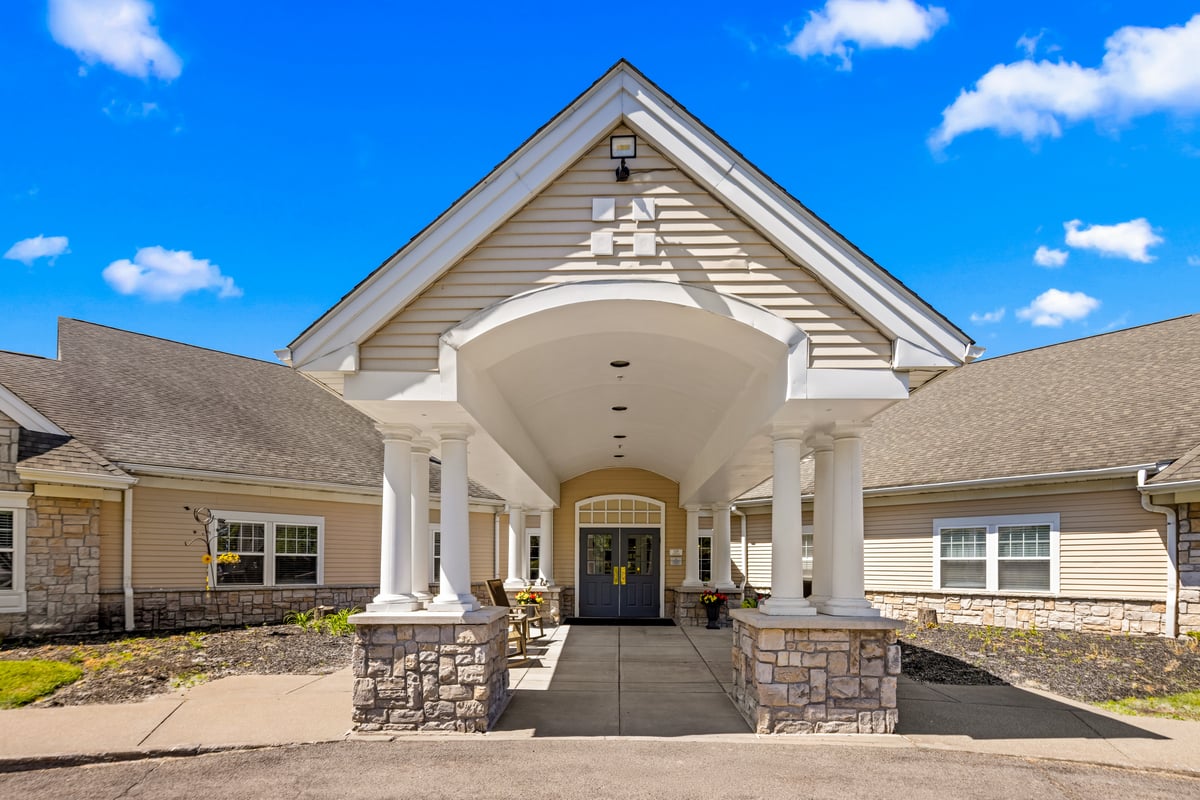
Traditional settings follow a medical model that can feel institutional. Therapeutic memory care design takes a residential approach instead, with familiar furniture, a home-like scale, and far fewer visual surprises. At Rittenhouse Village Pittsford, the result is a warm, boutique-style setting, with private suites like the Mulberry and Black Walnut that are easy to personalize.
Specialized Programming and Daily Engagement
A dementia-specific care environment also changes what happens inside it. Programs are built around what residents can still do and enjoy. Here, that means:
- Music and pet therapy that reach people when words no longer do
- Art and hands-on projects adapted to different ability levels
- Reminiscence built on each resident's life story
- Sensory experiences that soothe rather than overstimulate
- Sensations dining served on a predictable schedule in a calm room
Associates in a memory care neighborhood are trained in dementia-specific communication, redirection, and person-centered care, so a resident's distress is met with understanding rather than correction. In a regular care setting, well-meaning staff may lack that training.
Safety Features and Secure Environments
Safety is where memory care vs. a regular care setting differs most. A memory care neighborhood protects residents who may wander while keeping the atmosphere relaxed:
- Secured entrances with monitored exits that don't feel like locked doors
- An enclosed garden for safe time outdoors in any season, which matters through a Rochester winter
- Visual cues that gently redirect attention away from exits
- Kitchen appliances without live stove controls
- Bathrooms with grab bars that blend into the décor
Flooring is chosen to avoid patterns and dark thresholds that can read as holes or steps. Traditional settings may include some of these features, but rarely all of them.
Staffing Ratios and Associate Expertise
Memory care neighborhoods typically maintain higher associate-to-resident ratios because residents do better with frequent, familiar contact. Associates learn each resident's triggers and routines and adjust as the condition progresses.
As speech becomes harder, associates read body language, validate feelings, and respond without rushing. SHINE® Memory Care, the program at Rittenhouse Village Pittsford, is nationally recognized by the Alzheimer's Association® and built on research, memory care education, and continuous associate training. The purpose-built memory care benefits show up in every interaction.
Family Involvement and Support
Families need support, too. A good memory care neighborhood offers education, resources, and spaces made for visiting: a quiet corner for coffee, a courtyard bench, a family event on the calendar. Our dementia and memory care resources are a good place
A traditional setting can work in the earliest stages. Beyond that, the specialized environment and expertise of a memory care neighborhood make a real difference in daily comfort. Tour both kinds of communities, ask about training and ratios, watch how residents are engaged, and trust what you see.
What is a memory care neighborhood?
A secured, home-like area built specifically for people living with dementia, with trained associates and dementia-specific programming.
Is memory care the same as assisted living?
No. Assisted living offers help with daily tasks; memory care adds a secured setting, specialized training, and programming for cognitive change.
Does Rittenhouse Village Pittsford offer other living options?
No. It is a dedicated SHINE® Memory Care community.
Design is hard to judge from a brochure. Schedule a tour of Rittenhouse Village Pittsford and see how a purpose-built neighborhood feels in person.